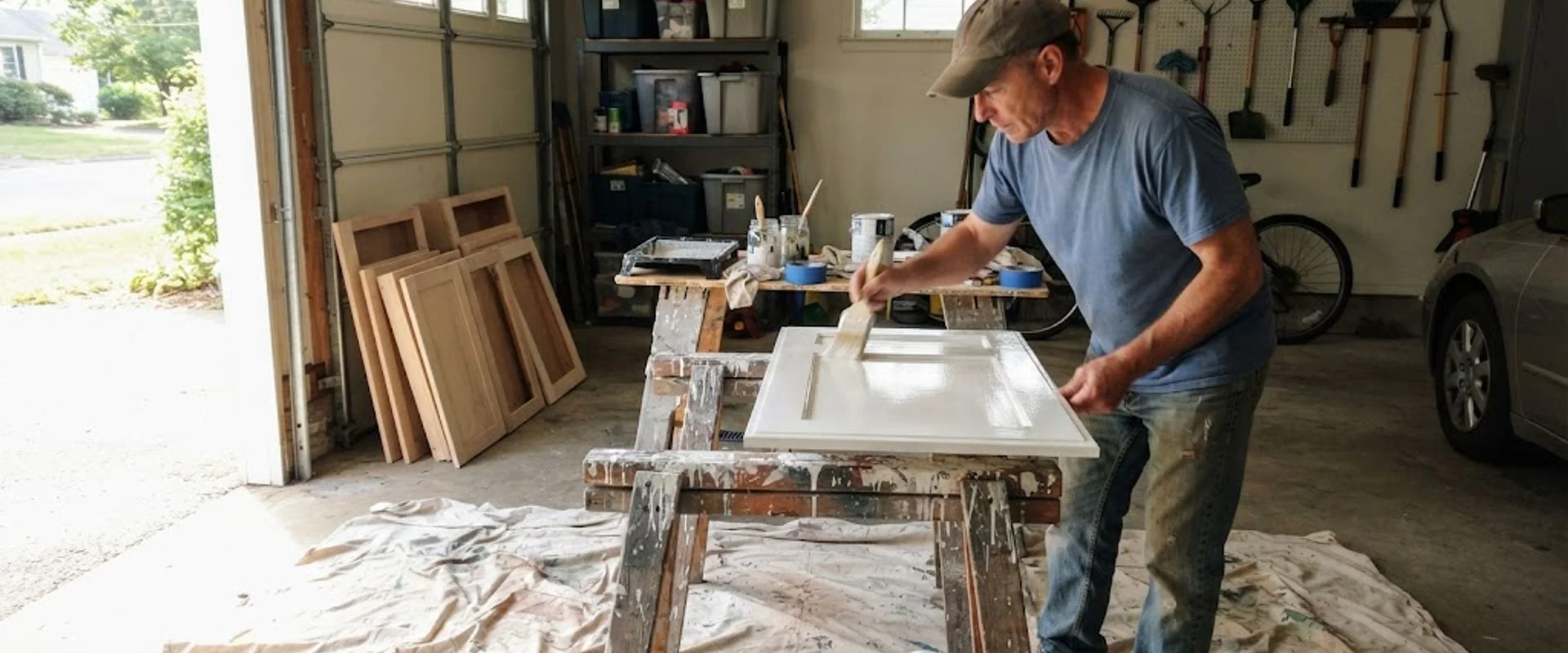
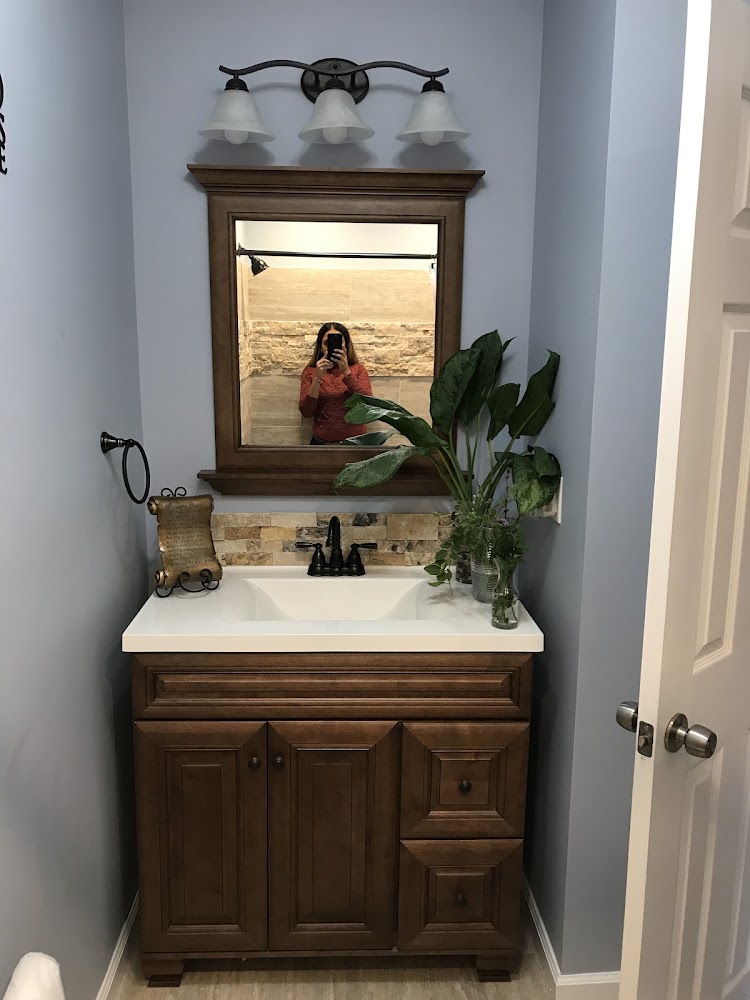
Cabinet refinishing and repainting is a way to change the look of a kitchen or bathroom without ripping out the carpentry underneath. Depending on the condition of your doors and boxes, a painter will either strip and sand the existing finish back to bare wood, or degrease and scuff-sand it enough for primer to grip. Doors and drawer fronts usually come off and get sprayed in a controlled space (a workshop or a taped-off area of the house), while face frames and end panels are often sprayed or brushed in place. A proper job includes filling grain and dents, priming with a bonding or stain-blocking primer, and finishing with two or more coats of a hard, cabinet-grade paint such as a waterborne alkyd or conversion varnish, not a wall paint. Hardware is usually removed and either reused or upgraded, and hinges get cleaned or replaced so doors sit right afterward.
What to look for before you hire
Ask what primer and topcoat system they use, whether doors are sprayed off-site or in your home, and how they contain dust and fumes if you're staying in the house during the job. Get a clear answer on drying and cure times, since cabinets can look dry to the touch within a day but need one to three weeks to fully harden before they can take daily handling without marking. Find out what happens to existing hardware, whether they fill or replace hinges, and what the warranty covers if paint chips or peels at a corner within the first year or two.
To compare local specialists side by side, see our ranked guide to Bristol's best painters. Our scores weigh things like finish quality, how well a painter preps and primes before spraying, reliability on timelines, and verified customer feedback specific to cabinet work rather than general house painting. The full breakdown of how we score and rank is on our methodology page.