How often should a business repaint? Commercial painting timelines
By Dana Whitfield · Updated 2026-07-23
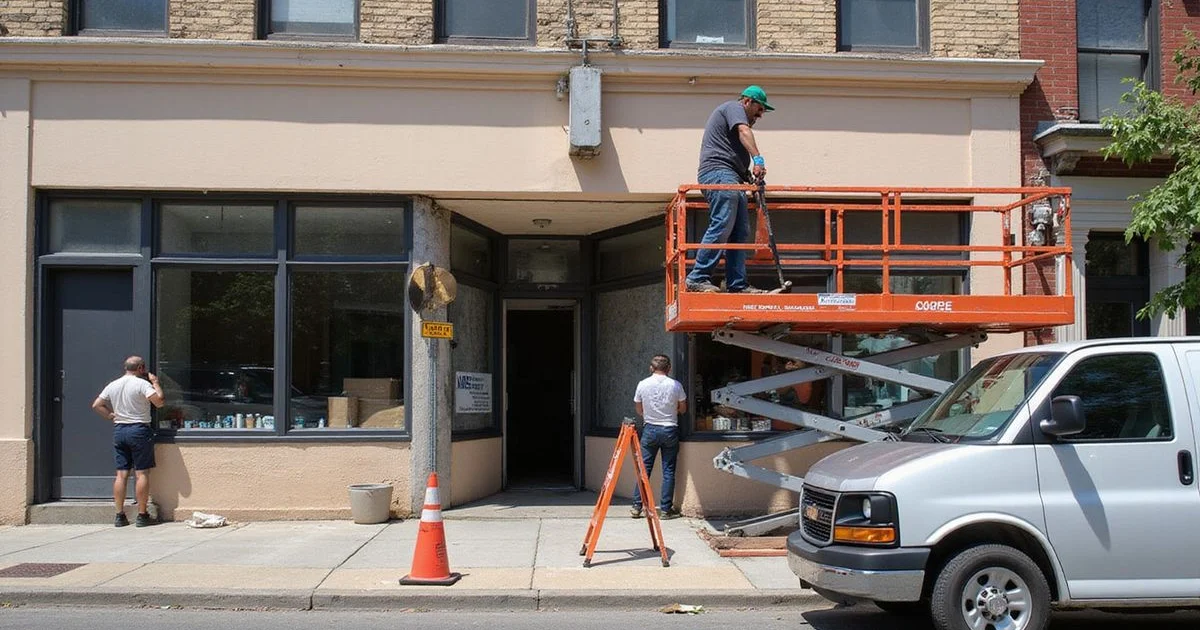
Unlike a home, a commercial space gets judged by everyone who walks through the door, which means the tolerance for scuffed walls or faded signage is much lower than it is for a personal residence. Knowing the general timeline helps you plan a repaint before it becomes obvious to customers, rather than reacting after the fact.
Typical repaint intervals by space type
| Space type | Typical interval | What shortens it |
|---|---|---|
| Retail storefront, high foot traffic | 3-5 years | Entrances, checkout areas, and walls near merchandise wear faster |
| Office interior | 4-6 years | Frequent tenant turnover, high-traffic hallways |
| Restaurant or food service | 2-4 years | Grease, steam, and frequent cleaning wear paint faster |
| Warehouse or industrial interior | 5-8 years | Depends heavily on equipment traffic and dust |
| Commercial exterior (any type) | 5-8 years | Sun exposure, coastal or high-humidity conditions |
These are general ranges. A business with heavy foot traffic near an entrance might need touch-ups on that specific wall well before the rest of the space needs a full repaint. For the exterior specifically, timing still matters: the best time of year to paint your home’s exterior in Connecticut covers the seasonal window that applies to a storefront or building exterior just as much as it does a house.
Signs it is time, regardless of the calendar
- Visible wear near high-touch areas, like door frames, stairwells, and reception walls.
- Fading or color mismatch in areas exposed to direct sun, especially noticeable on an exterior facing south or west.
- Chipping or peeling near entrances, where foot traffic, weather, and cart or cleaning equipment cause the most wear.
- A change in branding, signage, or tenant, which usually calls for new colors regardless of the existing paint’s condition.
- Customer or employee comments about the space looking dated or worn, often a more reliable signal than a strict age-based schedule.
Scheduling around business operations
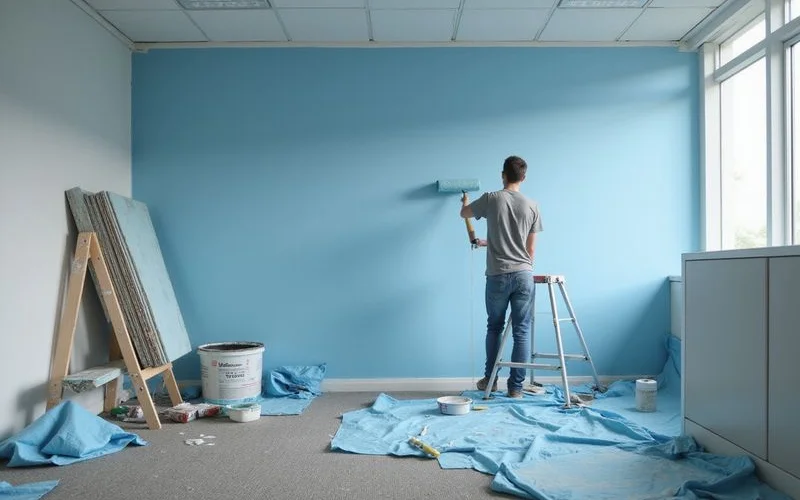
Commercial jobs usually need more scheduling coordination than residential ones, since the space often needs to stay partly or fully operational during the work. Painters in the commercial painting category commonly offer:
- Off-hours or overnight scheduling to avoid disrupting daytime operations.
- Section-by-section painting so only part of the space is closed off at a time.
- Low-odor, fast-drying paint for spaces that need to reopen quickly, like a restaurant that cannot close for multiple days.
Budgeting for a repaint before it is urgent
Businesses that treat repainting as a planned, recurring expense rather than an emergency reaction tend to get better scheduling flexibility and pricing, since they are not competing for a rushed slot. Building a repaint into a five-year facilities budget, adjusted based on the wear patterns specific to your space, avoids the scramble of trying to book a crew the week before an inspection or an event.
Getting multiple locations on the same schedule
Businesses with more than one location in the Bridgeport or Stamford area sometimes find it more efficient to bundle repaints across sites into a single contract, even if the individual timing differs slightly by location. A painter working across multiple sites for the same business can offer more consistent pricing and color matching than hiring separately for each one, and it simplifies coordination if a consistent brand look matters across locations. Ask a painter directly whether they offer multi-site scheduling or pricing before assuming each location needs its own separate process.
Documenting the decision
Keeping a simple record of when each part of a commercial space was last painted, along with photos, makes the next repaint decision easier and gives you a factual basis for facilities budgeting rather than relying on memory or guesswork. It also helps when comparing quotes, since a painter can see exactly what was done last time and price accordingly.
Balancing durability with color choice
For high-traffic commercial spaces, paint durability matters as much as color, since a scuff-resistant finish can meaningfully extend the interval between repaints in busy hallways and entrances. Semi-gloss or satin finishes generally hold up to cleaning and contact better than flat paint, even though flat finishes sometimes look more polished in low-traffic executive or meeting spaces. Discussing finish type, not just color, with your painter is worth the extra few minutes when planning a commercial repaint.
Ready to compare commercial painters? Check the methodology page for how listings are scored, or start from the homepage to see current options.
Common questions
- How often should a retail storefront be repainted?
- Most retail spaces benefit from a fresh coat every three to five years, sooner for high-traffic entrances and walls near customer touchpoints that show wear faster.
- Does commercial exterior paint last as long as residential?
- Similar timelines apply, generally five to eight years for exterior work, though sun exposure, foot traffic, and building material all shift that range in either direction.
- What is the biggest reason businesses repaint sooner than planned?
- A change in branding or ownership. New signage, a rebrand, or a change in tenant almost always triggers a repaint regardless of how the existing paint is holding up.
- Can a business stay open during interior repainting?
- Often yes, especially with off-hours or overnight scheduling, low-odor paint, and working section by section rather than closing the whole space at once.