Red flags and questions to ask before you hire a painter
By Dana Whitfield · Updated 2026-07-06
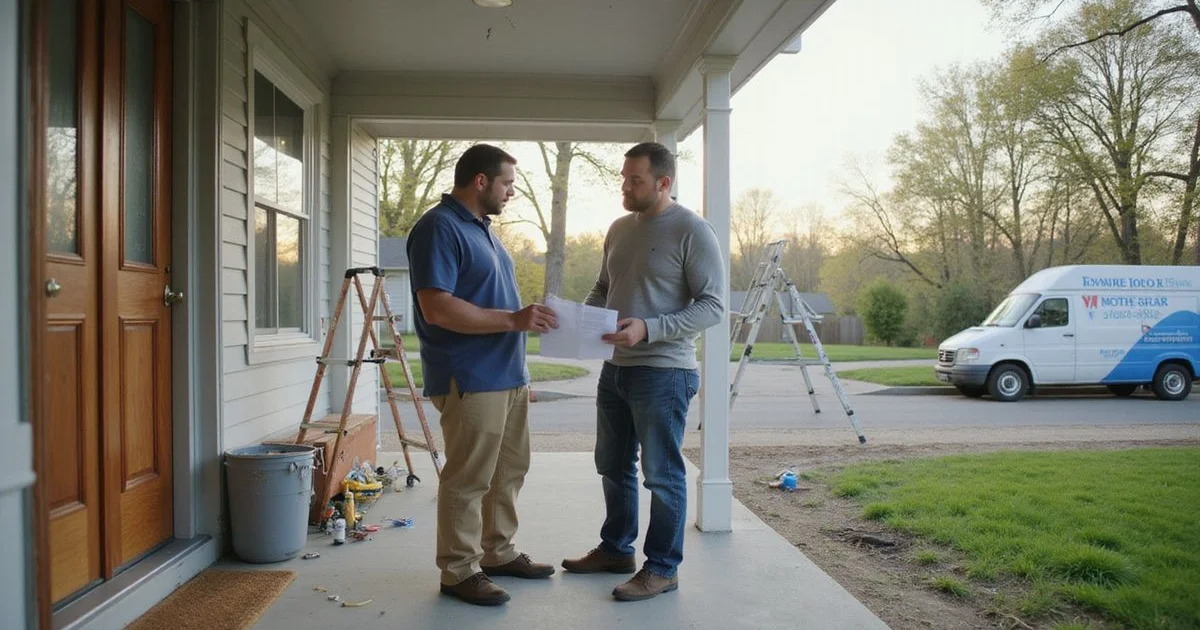
Most painting jobs go fine. But the ones that go wrong tend to share a small set of warning signs that show up again and again in customer complaints: vague pricing, poor communication, and paperwork that never quite gets nailed down. Knowing these patterns ahead of time makes it much easier to spot trouble before you have signed anything.
The complaint patterns worth knowing
Across painting reviews, a handful of issues come up more than others:
- Estimate padding after the job starts. A quote that grows once work is underway, often for prep work that should have been obvious during the initial walkthrough.
- Payment terms that were not clearly explained. Confusion over deposits, progress payments, or final balance due, usually because it was never put in writing.
- Poor communication about arrival times and scheduling. Crews that show up late or skip days without notice, leaving a homeowner unsure when the job will actually finish.
- Uneven application or rushed cleanup. Sloppy cut lines, drips, or debris left behind, often tied to a crew moving too fast to hit a deadline.
None of these are universal, most painters do solid work and communicate clearly, but they are common enough to be worth screening for.
Questions to ask before you hire
- “Can I get that in writing?” A verbal quote that never becomes a written estimate is the single easiest way to end up with a dispute later.
- “What exactly is included in prep work?” Ask them to name it specifically: patching, sanding, priming, masking. Vague answers here often mean the actual scope is unclear even to the painter.
- “How many coats, and what paint brand?” Cheaper paint or a missing coat is a common way quotes get lower without the painter mentioning it.
- “What is your payment schedule?” A deposit for materials, a progress payment partway through, and a final balance on completion is a normal structure. Full payment upfront is not.
- “What happens if you find hidden damage once work starts?” A good painter has a clear answer: how they will document it, quote it separately, and get your approval before proceeding.
- “Can I see a certificate of insurance?” Anyone can say they are insured. A real certificate takes a day or two to produce and can be verified with the insurance agent listed on it.
These questions hold up regardless of the specific job. Hiring for wallpaper installation instead of a straight repaint does not change the need for a written scope and a clear payment schedule.

Comparing quotes side by side
| What to check | Green flag | Red flag |
|---|---|---|
| Estimate format | Written, itemized, specific | Verbal only, vague total |
| Payment schedule | Staged: deposit, progress, final | Full payment requested upfront |
| Response to questions | Specific, direct answers | Vague or evasive answers |
| Site visit before quoting | In person or detailed photo review | Quote given with no visual of the job |
When something feels off mid-job
If a painter starts pushing for more money without a clear explanation, or communication goes quiet for days at a time, address it early rather than waiting until the job is finished. Ask for updates in writing, and if the issue does not resolve, most Connecticut homeowners have recourse through the Department of Consumer Protection for home improvement contractor disputes.
Trusting your gut during the first conversation
Beyond the specific questions, pay attention to how a painter handles the initial conversation itself. A painter who walks the space carefully, takes notes or photos, and asks you clarifying questions about your goals is generally a good sign. One who rushes through a walkthrough, gives a number without really looking at the space, or seems irritated by questions is worth weighing carefully against other options, even if their price looks appealing on paper.
Reading reviews with these patterns in mind
When you look through reviews for a painter, search specifically for mentions of communication, final pricing versus the original quote, and cleanup, rather than just the overall star rating. A painter with consistently high ratings but a couple of reviews mentioning unexpected charges or slow follow-up is worth a direct conversation about those exact issues before you commit, since asking about a known pattern upfront often surfaces useful, specific answers.
Ready to start comparing painters? Head to the homepage to browse current listings, or check the methodology page to see how this directory scores painters on communication and reliability.
Common questions
- What is the biggest red flag when hiring a painter?
- A quote that keeps changing after the job starts, sometimes called estimate padding. If a painter adds charges mid-job for things that should have been visible during the initial walkthrough, that is worth pushing back on immediately.
- Should I worry if a painter wants a large deposit upfront?
- A modest deposit to cover materials is normal. Be cautious of anyone asking for most or all of the payment before work begins, since that leaves you with little room to push back if the job goes poorly.
- How many quotes should I get before choosing a painter?
- Three is a reasonable number. It gives you enough to spot an outlier price and compare what each painter includes, without dragging the process out for weeks.
- What should a good written estimate include?
- Scope of work, paint brand and quality, number of coats, prep work included, start and estimated completion dates, payment schedule, and what happens if unexpected issues come up.