Is it safe to be home while your house is being painted?
By Dana Whitfield · Updated 2026-08-07
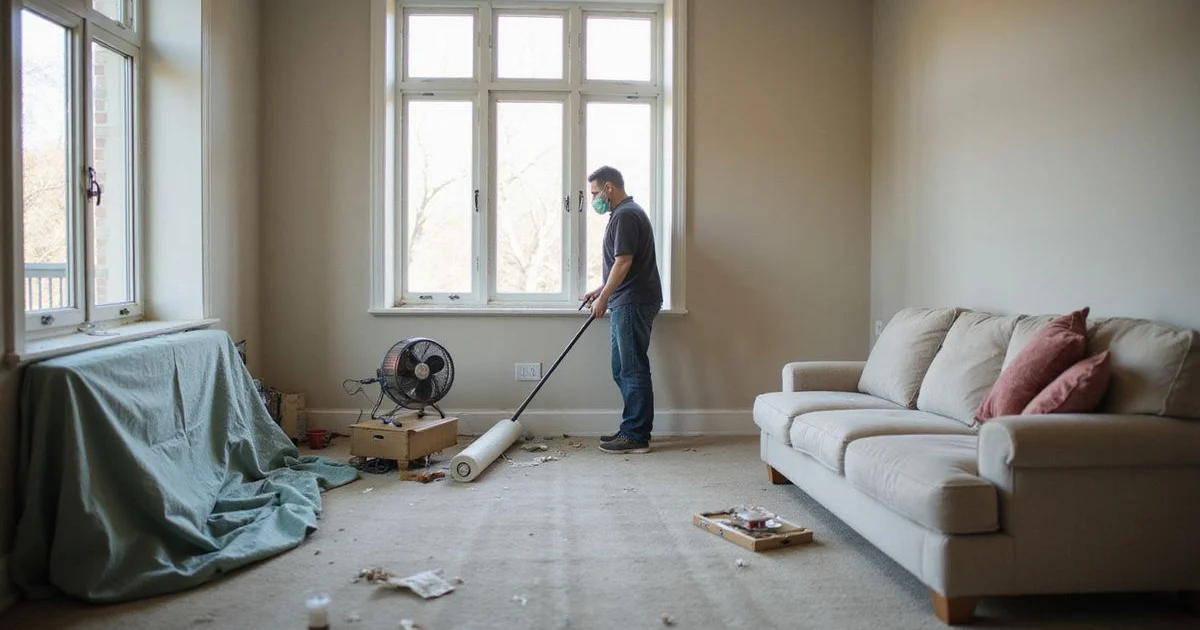
Paint smell is unavoidable to some degree, but how much it affects your household during a job depends a lot on the products used and how the space is ventilated. Here is what VOCs actually are, what the real risk looks like, and how to make the days during and after a paint job more comfortable.
What VOCs are and why they matter
Volatile organic compounds, or VOCs, are chemicals in paint that evaporate into the air as it dries and cures. That off-gassing is what causes the strong smell associated with fresh paint. Higher-VOC paints, typically oil-based products, release more of these compounds than modern low-VOC or zero-VOC latex paints.
For most healthy adults, short-term exposure during and shortly after a paint job causes mild symptoms at most, like a headache or slight irritation from the smell, that clear up once the space is ventilated. The concern is more pointed for a few groups:
- People with asthma or chemical sensitivities, who may notice more pronounced symptoms from fumes.
- Pregnant women, who are often advised to limit exposure to strong chemical odors and to prioritize good ventilation if staying in the home during painting.
- Infants and young children, whose smaller body size means a given concentration of fumes represents a larger relative exposure.
- Anyone with existing respiratory conditions, who may want to arrange to be elsewhere for at least the first day of a job using higher-VOC products.
This is general information, not medical advice. If you have specific health concerns about paint exposure, a doctor can advise on precautions appropriate to your situation.
Practical steps during the job
| Step | Why it helps |
|---|---|
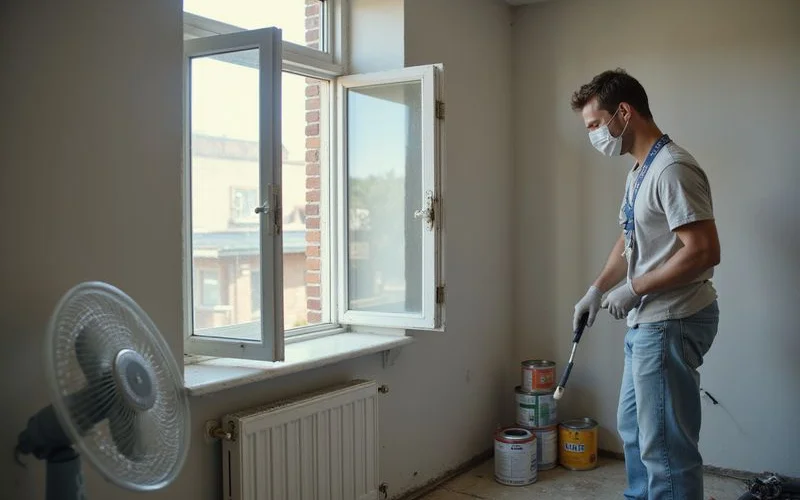
| Open windows and run fans | Creates cross-ventilation that clears fumes faster than a closed room |
| Ask for low-VOC or zero-VOC paint | Reduces both odor and the amount of off-gassing during and after application |
| Keep HVAC vents open, not closed | Helps circulate air rather than trapping it in one room |
| Avoid sleeping in a freshly painted room the first night | Odor and off-gassing are strongest in the first 24-48 hours |
| Plan painting around anyone especially sensitive in the household | Sequencing rooms, or arranging to be elsewhere briefly, reduces exposure for that person |
Asking your painter about product choice
It is a reasonable question to ask directly: what VOC level is the paint you are using, and is a low-VOC option available for this job. Many painters already default to low-VOC products for interior work, since it is now common in most paint lines, but confirming it upfront, especially for a nursery or a bedroom, is worth the extra minute.
Sequencing a job around a sensitive household member
If someone in your home is pregnant, has asthma, or is otherwise more sensitive to fumes, it is worth discussing the order of rooms with your painter before work begins. Starting with rooms farther from where that person spends the most time, and finishing bedrooms or a nursery a few days before anyone needs to sleep there, gives the strongest odor and the earliest off-gassing time to fade before it matters most. For a whole-house repaint, this kind of sequencing costs nothing extra and just requires mentioning it when the schedule is first put together.
Pets and paint fumes
Pets, especially birds and small mammals with more sensitive respiratory systems, can be more affected by fresh paint fumes than people are. Keeping pets in a well-ventilated part of the home away from active painting, or arranging for them to stay elsewhere for the first day of a job, is a reasonable precaution even for a standard low-VOC interior paint job. If your home was built before 1978, lead paint safety for kids and pets during a repaint covers a separate set of precautions worth checking before work starts.
What to expect once the job wraps up
Most homeowners notice the strongest smell in the first 24 to 48 hours, tapering off steadily over the following week with consistent ventilation. It is normal for a very faint paint smell to linger for a few weeks as the coating fully cures, especially in a room with limited airflow. If a strong chemical smell persists well beyond that window, it is worth asking the painter what product was used and whether additional ventilation time is expected, since that can point to a specific paint type or a room that simply needs more airflow than it is getting.
For more on how interior painters are evaluated in this directory, see the methodology page, or head to the homepage to browse current listings.
Common questions
- Do I need to leave my house while it is being painted?
- Not usually for a standard interior job with good ventilation, though people with asthma, respiratory conditions, or who are pregnant may want to limit time in freshly painted rooms or stay elsewhere for a day or two.
- How long do paint fumes last after a room is painted?
- Strong odor typically fades within a few days with good ventilation, though low levels of off-gassing from VOCs can continue for several weeks as the paint fully cures.
- Is low-VOC paint actually safer?
- Yes, low-VOC and zero-VOC paints release fewer volatile compounds during application and drying, which generally means less odor and lower exposure, especially useful for bedrooms, nurseries, and homes with occupants sensitive to fumes.
- What is the fastest way to clear paint smell from a room?
- Open windows and run fans to create cross-ventilation, and if possible keep the room's HVAC vents open rather than closed to help circulate and filter the air.